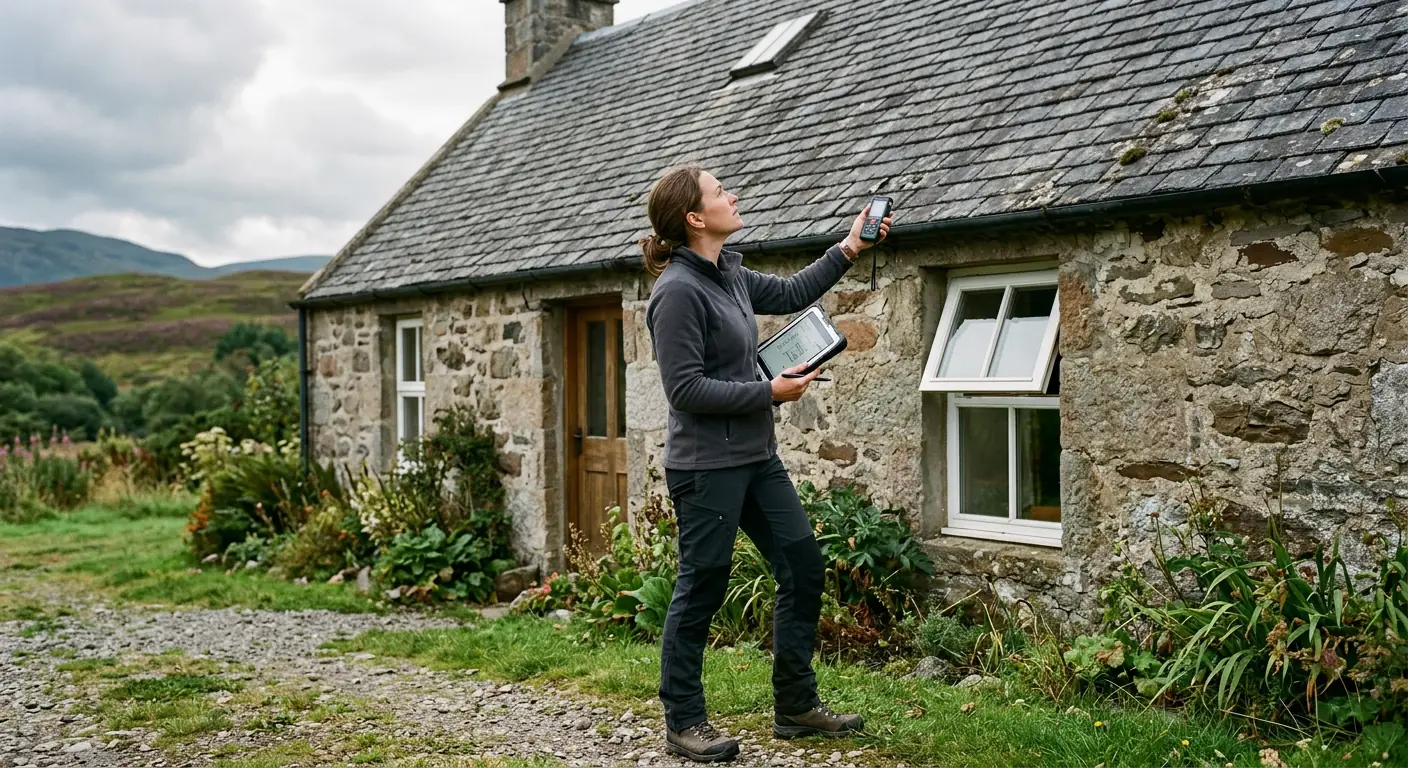
What happens before the installer visits?
Most installers start with a phone call and a desktop check. They ask about your electricity use, your roof and any plans for a battery or electric car, then look at satellite images of your property. This helps them arrive prepared and spot obvious problems before anyone climbs a ladder.
Have a recent electricity bill or your annual usage in kWh to hand, as this shapes the system size. Mention planned changes, such as a heat pump, an electric car or working from home, which can increase demand.
If you live in a flat, a listed building or a conservation area, say so at this stage so planning can be checked early.
What does the installer check on the roof?
The installer checks the roof's direction, pitch and size, the condition of slates or tiles, and any shading from chimneys, trees or nearby buildings. They usually look in the loft to check the rafters and how the roof is built. This decides how many panels fit safely, and where.
Scottish roofs are often slate laid on sarking boards, which affects how fixings are made. Expect photos and measurements, and possibly a drone or pole camera for roofs that are hard to see.
Low winter sun makes shading more significant here than further south, so a careful shading assessment matters.
What electrical checks are part of the survey?
The installer looks at your consumer unit, meter and earthing to confirm they can take a solar system safely. They also plan where the inverter and any battery will go, and how cables will run from the roof. Some older consumer units need upgrading before installation can go ahead.
Common inverter locations include lofts, garages and utility cupboards. Batteries need suitable space with ventilation and safe access. If your home has a three-phase supply, mention it, as it changes the design.
The installer should also confirm the grid route: G98 notification for smaller systems, or G99 approval in advance for larger ones.
What should the written quote include?
A proper quote lists the panels, inverter and any battery by make and model, the system size in kW, an estimated yearly generation, and everything included, such as scaffolding and bird protection. It should set out warranties, timescales and payment terms clearly, so you can compare quotes like for like.
Typical, subject to survey: a 4 kW system for a Scottish house is often quoted somewhere around £5,000 to £8,000 including scaffolding, with batteries on top. Difficult access, tenements or roof repairs can fall outside that range.
Ask how the generation estimate was worked out, and be cautious of any quote that promises savings without explaining the assumptions. Interest-free credit up to £30,000, subject to status.
What happens after I accept a quote?
Your installer arranges any planning checks and the grid notification or application, then books scaffolding and an installation date. Most home installs take one to two days on the roof. Afterwards you should receive certificates, warranty documents and a walk-through of the system and its monitoring app.
Keep the MCS certificate and electrical certificate safe. You need them to register for a Smart Export Guarantee tariff, and buyers will ask for them if you sell your home.
Check your monitoring in the first few weeks to make sure generation looks sensible, and contact the installer if anything seems wrong.